Herbal Wellness
Why Has Chamomile Been a Women's Wellness Secret for Thousands of Years?
This delicate flower may look simple, but hidden inside its tiny white petals are natural compounds that have supported women's…
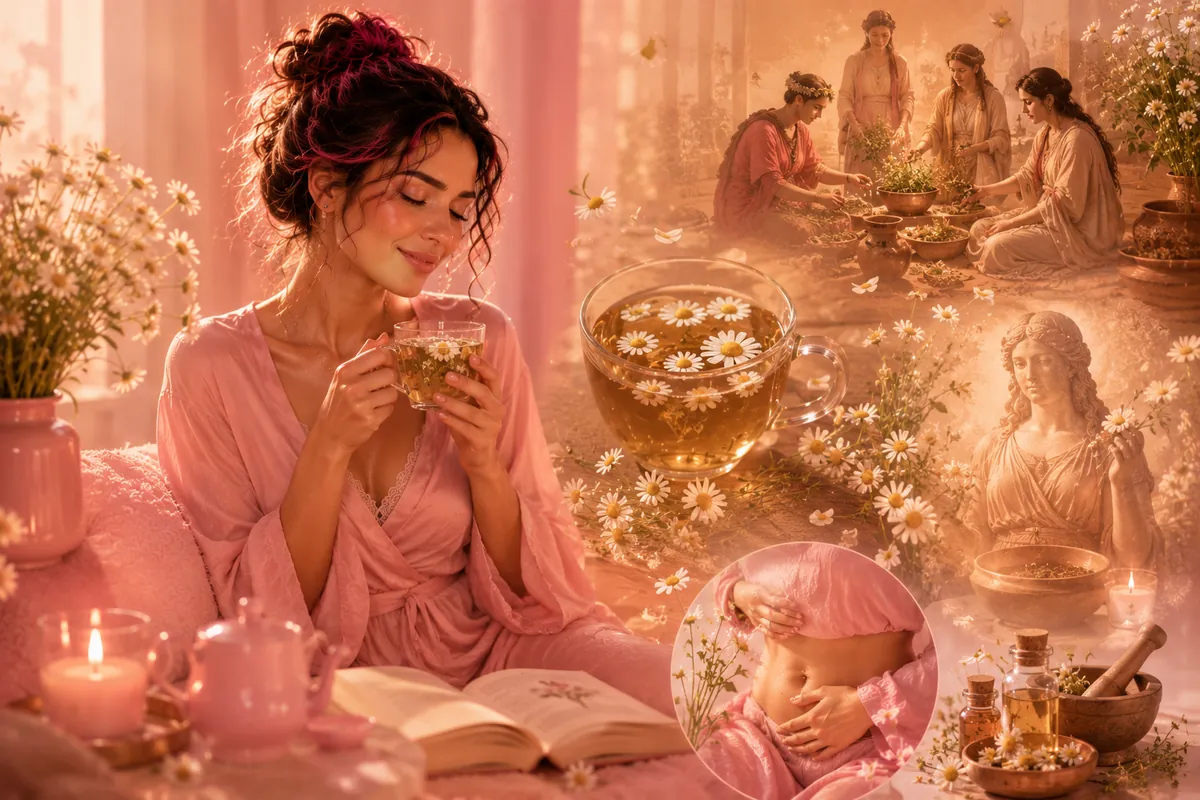
Why Has Chamomile Been a Women's Wellness Secret for Thousands of Years?
Chamomile is often thought of as "the tea you drink before bed."
While it certainly has a reputation for promoting relaxation, that's only one chapter of its story.
For centuries, cultures across Europe, North Africa, and the Middle East have turned to this humble daisy-like flower not only to unwind but also to soothe digestion, comfort irritated skin, ease menstrual discomfort, and support everyday wellness.
Modern research has revealed that chamomile's remarkable effects come from dozens of naturally occurring plant compounds working together—not from a single magical ingredient.
The more you understand this tiny flower, the easier it becomes to appreciate why it has remained one of the world's most beloved herbal remedies.
More Than a Flower: The Natural Chemistry Inside Chamomile
One of the reasons chamomile has been treasured for generations is its rich collection of plant compounds known as flavonoids and terpenoids.
These natural substances help protect the plant itself—and may also contribute to many of chamomile's wellness benefits.
Among the most studied compounds are:
- Apigenin, a powerful antioxidant associated with chamomile's calming properties.
- Bisabolol, known for its soothing effects on the skin.
- Chamazulene, a blue-colored compound formed during extraction that has been studied for its calming properties.
- Flavonoids, which help protect plant cells from oxidative stress.
Rather than working independently, these compounds create what scientists often call a synergistic effect, meaning they may work better together than alone.
Why Does Chamomile Help You Feel Calm?
Many people assume chamomile simply "makes you sleepy."
In reality, it doesn't work like a sleeping pill.
Instead, one of its natural compounds—apigenin—is believed to interact with receptors in the brain that help regulate relaxation.
This is why many people describe chamomile as helping them feel:
- calmer
- less mentally overwhelmed
- more prepared for sleep
Rather than forcing sleep, chamomile helps create a calmer environment in which sleep can occur more naturally.
That's an important difference.
Your Digestive System Loves Gentle Herbs
Stress and digestion are closely connected.
When you're anxious, your digestive system often slows down or becomes more sensitive.
Chamomile has traditionally been enjoyed after meals because it may help soothe occasional digestive discomfort.
Many people drink chamomile tea after eating to support:
- bloating
- mild stomach cramps
- feelings of fullness
- digestive relaxation
Warm herbal tea also encourages slower breathing and mindful eating—two habits that naturally support digestion.
Chamomile Isn't Just for Drinking
One of the most surprising facts about chamomile is that many skincare products include it as an ingredient.
Why?
Because chamomile contains naturally soothing compounds that make it popular in products designed for sensitive or easily irritated skin.
You may find chamomile in:
- facial mists
- cleansers
- masks
- moisturizers
- eye creams
- after-sun products
While it isn't a miracle ingredient, chamomile can complement routines focused on comfort and maintaining a healthy-looking skin barrier.
A Gentle Companion During Your Menstrual Cycle
Chamomile has long been used in traditional wellness practices to help women feel more comfortable during their menstrual cycle.
Many women enjoy a warm cup of chamomile tea when experiencing:
- menstrual cramps
- feelings of tension
- irritability
- emotional stress
While herbal tea isn't a substitute for medical care, small rituals like preparing a warm cup of chamomile can become comforting moments of self-care during more challenging days of the month.
Sometimes the ritual itself is just as healing as the ingredients.
Does Chamomile Contain Caffeine?
One of the biggest misconceptions is that all tea contains caffeine.
Chamomile is actually an herbal infusion, not a traditional tea made from the Camellia sinensis plant.
That means it is naturally caffeine-free.
This makes it a lovely evening choice for people who are trying to reduce caffeine without giving up a comforting warm drink.
Its naturally floral, slightly sweet flavor also means many people enjoy it without adding sugar.
How to Get the Most from Chamomile
Small details can make a noticeable difference.
To prepare a flavorful cup:
- Use freshly boiled water that has cooled for about a minute.
- Steep dried flowers or a tea bag for 5–10 minutes.
- Keep the cup covered while steeping to help preserve aromatic compounds.
- Avoid boiling the flowers directly, which can affect their delicate flavor.
Chamomile also pairs beautifully with:
- lavender
- lemon balm
- peppermint
- fresh lemon
- a small drizzle of honey (if desired)
- Who Should Be Careful?
Although chamomile is generally well tolerated, it isn't suitable for everyone.
You should speak with a healthcare professional before using chamomile regularly if you:
- have allergies to plants in the daisy family (such as ragweed or chrysanthemums)
- are pregnant or breastfeeding and have questions about herbal products
- take blood-thinning medication or other medicines that may interact with herbal supplements
Natural doesn't always mean appropriate for every individual.
Listening to your body and seeking professional guidance when needed is part of intentional wellness.
Bloom Reflection
Chamomile reminds us that strength doesn't always arrive in bold, dramatic ways.
Sometimes it comes quietly—in a warm cup held between your hands, a slower breath, and a few peaceful moments that help you reconnect with yourself.
What small evening ritual helps you feel most at ease?
Bloom Tips
- Enjoy chamomile 30–60 minutes before bedtime as part of a calming evening routine.
- Pair it with reading, journaling, or gentle stretching for a more relaxing ritual.
- Drink it slowly instead of multitasking to fully enjoy its calming experience.
- Store dried chamomile in an airtight container away from light and heat.
- Choose high-quality whole flowers when possible for a richer aroma and flavor.
Today's Bloom
Tonight, replace one screen-filled evening with a simple chamomile ritual.
Prepare a warm cup, dim the lights, breathe deeply, and spend ten quiet minutes doing absolutely nothing.
Sometimes wellness begins with allowing yourself to slow down.
Bloom Reminder
The most meaningful wellness habits are often the gentlest ones.
A tiny flower won't change your life overnight—but the peaceful moments you create around it just might.
Bloom beautifully, one calming ritual at a time.