Beauty
Why Your Skin Suddenly Starts Glowing
Some weeks your skin just behaves — clearer, plumper, easier. It isn't random, and it isn't luck. Your cycle is quietly running your complexion.
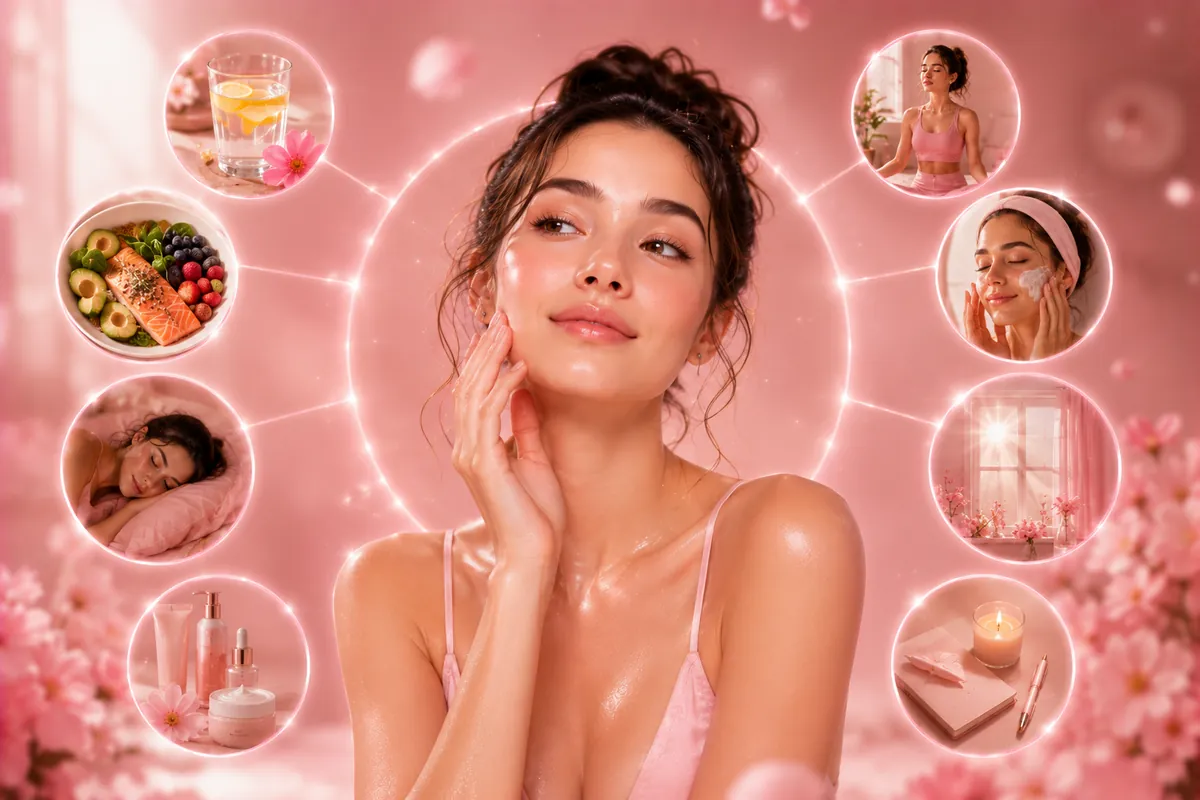
Why Your Skin Suddenly Starts Glowing
You know the feeling.
There's a stretch each month where your skin just… behaves. It's smoother, brighter, plumper. Makeup glides on. You catch your reflection and think, why can't it be like this all the time?
And then, a couple of weeks later, it changes — congested, dull, a breakout arriving right on schedule.
Here's the piece most skincare routines ignore entirely: your skin is not the same all month, because your hormones aren't. Once you understand the rhythm, that "good skin week" stops feeling like luck and starts feeling like something you can anticipate.
Estrogen Is Your Skin's Best Friend
The glow has a name, and it's estrogen.
In the follicular phase — the week or so after your period ends — estrogen rises steadily toward its peak. And estrogen is wonderful for skin.
It supports collagen, the protein that keeps skin firm and bouncy. It boosts hydration, so skin looks plumper and dewier. It even helps keep oil production in balance. As estrogen climbs, your skin quietly climbs with it.
This is your complexion's springtime — a rising tide lifting everything toward that clear, luminous best.
@read CY007 | This bright week peaks at ovulation — meet the glow week your body was built for →
Why It Feels Like a Fresh Start
There's a reason this week feels renewing, not just pretty.
Right after your period, your skin is emerging from its most sensitive phase into its most resilient one. It tolerates more, heals faster, and responds beautifully to care.
That makes the follicular phase the ideal time for the slightly more active parts of your routine — a gentle exfoliation, a vitamin C serum, anything that helps you catch and amplify that natural radiance.
Your skin is primed for renewal. Meeting it with a little extra care now pays off more than at any other point in the month.
Then the Tide Turns
Understanding the glow also means understanding why it fades — so you can stop blaming yourself.
After ovulation, estrogen falls and progesterone rises. Progesterone can stimulate oil production and cause slight swelling that congests pores. This is why, in the luteal phase before your period, skin often turns oilier, more reactive, and more prone to breakouts.
That pre-period breakout isn't your skincare failing. It's a predictable hormonal shift — and it will pass as reliably as it arrived.
Working With the Rhythm
Once you see the pattern, you can ride it instead of fighting it.
In your glowing follicular week, lean in — this is the time for actives, gentle exfoliation, brightening care, and letting your skin show off. In the luteal week, simplify and soothe — gentler products, calming ingredients, and kindness rather than aggressive "fixing" when a breakout appears.
@tool cycle | Track your skin alongside your cycle and learn your own pattern — open your Cycle Tracker
You stop chasing consistency your skin was never going to give you. You start caring for the skin you actually have that week.
Bloom Reflection
For years, your skin may have felt frustratingly unpredictable — glowing one week, betraying you the next, with no clear reason why.
There was always a reason. Your complexion has been quietly following the same monthly tide as the rest of you, rising with estrogen and softening as it falls.
When you stop expecting the same skin every day and start meeting each phase as it comes, skincare turns from a fight into a rhythm — and the glow, when it arrives, feels like an old friend you were expecting.
Bloom Tips
- Expect your clearest, dewiest skin in the follicular week, as estrogen rises.
- Use that window for gentle exfoliation and brightening actives like vitamin C.
- In the luteal week, simplify and soothe — skin turns oilier and more reactive before your period.
- Don't blame your products for a pre-period breakout; it's a predictable hormonal shift.
- Track skin alongside your cycle to learn your own pattern and plan around it.
Today's Bloom
Notice where you are in your cycle, and look honestly at your skin today.
Then match your care to the week you're in — a little brightening in your glow phase, a little soothing before your period. That's skincare, finally in rhythm.
Bloom Reminder
Your "good skin week" was never luck.
It's estrogen, rising like a tide — and now that you can see it coming, you can meet it.